Face level sports
Naturally powered sports experienced with forward motion, headfirst & horizontal to gravity. These are the eight we've ridden, flown and filmed since 2003.
The guideBy Josh Galt, founder of Face Level Industries
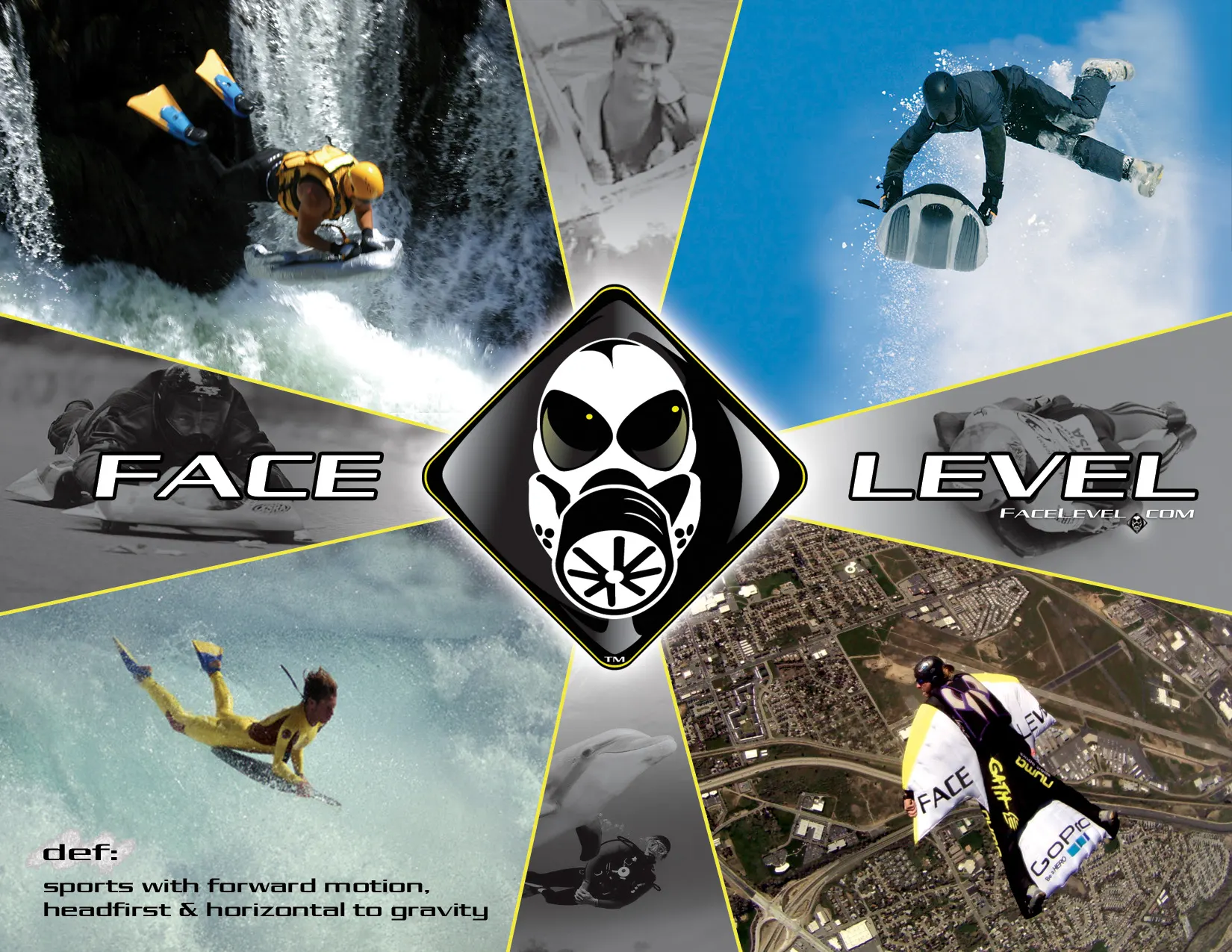
Face level sports are sports you do lying flat and going headfirst, moved by gravity, water, wind or your own body instead of a motor. Your face leads, often a hand's width from the water, snow, ice or road. Face Level Industries groups eight of them, one per element: riverboarding (river), wingsuit flying (air), airboarding (snow), bodyboarding (wave), xledding (road), skeleton (ice), freediving (sea) and windrafting (sail).
The testFour things they share
- Naturally poweredGravity, a current, a wave, the wind or your own muscles. No engine.
- Forward motionYou're travelling somewhere: down the river, the mountain, the track, across the sky.
- HeadfirstYour head leads and your eyes see what's coming before the rest of you gets there.
- Horizontal to gravityYou lie flat, belly down, across gravity's pull instead of standing or sitting against it.
Riverboarding
River
- Also called
- Hydrospeed · sledging · nage en eau vive
- Powered by
- The current and gravity, plus your fins
- On the record
- First riverboard descents of Gorilla on the Green River Narrows and the 15 m Hollin Chico. The first two Riverboarding World Championships, 2013 and 2015.
You lie on a buoyant board in whitewater, chest and hips supported, legs trailing behind you in fins. You kick to move and ferry, and steer with your arms, your body and the board's handles. Your face rides a few inches above the current, so you read every rapid from the river's own level.
The sport started in France in the late 1970s as hydrospeed. New Zealanders call it sledging, and most English speakers call it riverboarding: one sport under all of those names. Boards run from big foam rescue boards like the Carlson, to custom foam hydrospeeds, to molded plastic hydrospeed-style boards built for steep creeks. We compare them in Rescue board vs riverboard.
Riverboarding is where Face Level began. facelevel.com went live in 2003 as the English-language home of the sport. Its riders took first riverboard descents of Gorilla on North Carolina's Green River Narrows and the 15 m Hollin Chico in Ecuador, and Face Level founder Josh Galt created the Riverboarding World Championship. The first ran on Indonesia's Citarum River in 2013 with 40 athletes from 10 countries; the second ran on Guatemala's Río Lanquín in 2015.
Getting started: go with a guide on easier whitewater, in a helmet, PFD, fins and wetsuit, and never ride alone. A swiftwater rescue course is worth more than any board.
Wingsuit flying
Air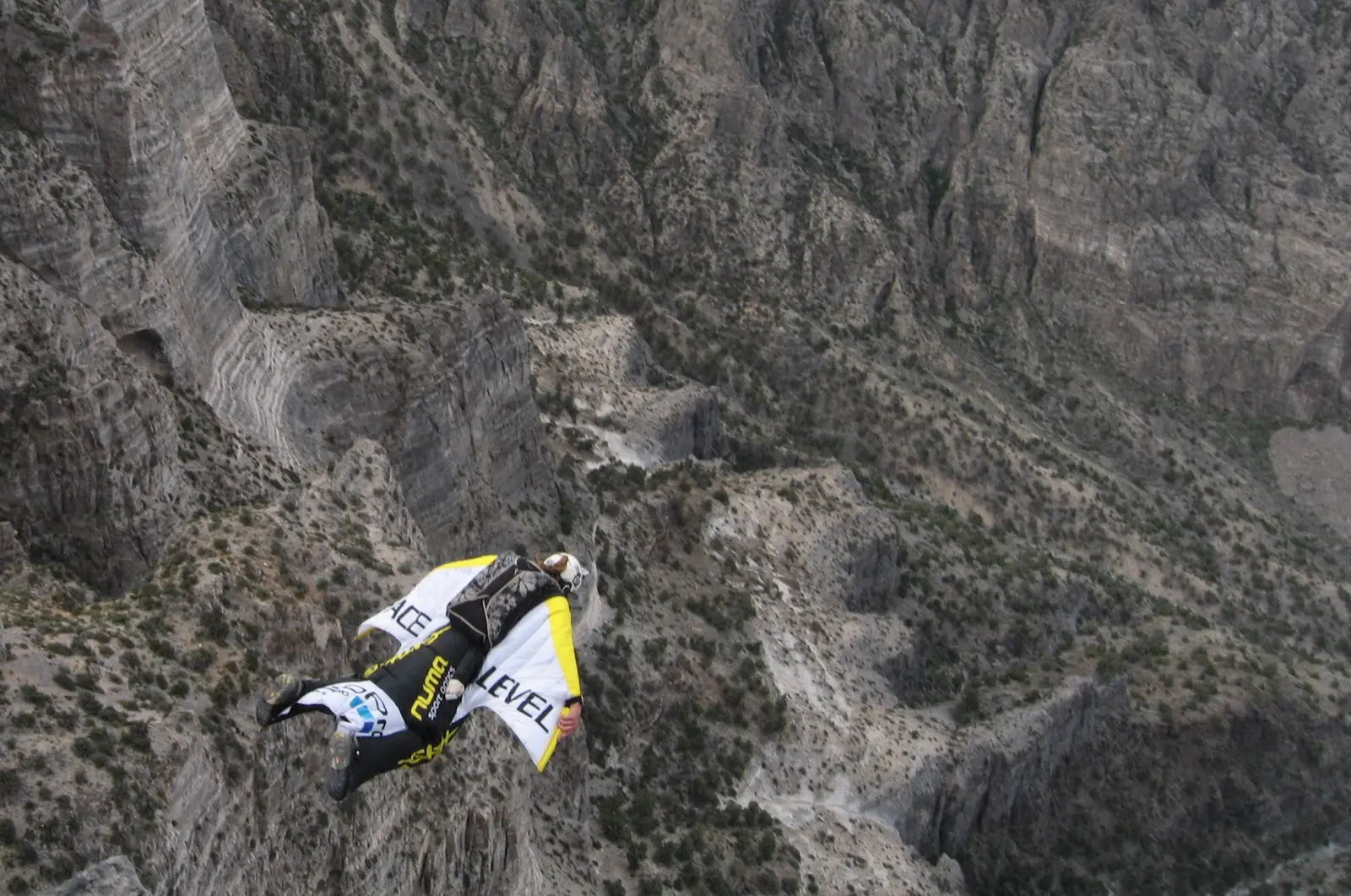
- Also
- Tracking · hang gliding
- Powered by
- Gravity
- On the record
- A yellow and white Face Level wing, gas mask and all, flew in the FLI years.
A wingsuit puts fabric wings between your arms and your body and between your legs. The extra surface slows the fall and turns it into a controllable glide: the pilot flies belly to the earth, head forward, and steers by changing body shape and the tension of the wings.
French skydiver Patrick de Gayardon developed the modern suit in the 1990s. After his death in 1998, Robert Pečnik and Jari Kuosma began producing BirdMan suits in 1999, the start of the sport's commercial era. Pilots jump from aircraft, or from cliffs as BASE jumpers.
Two relatives fly the same way. In tracking, a skydiver with no wings shapes their body to fly forward instead of falling straight down. In a hang glider, the pilot hangs prone, head forward, under the wing.
Airboarding
Snow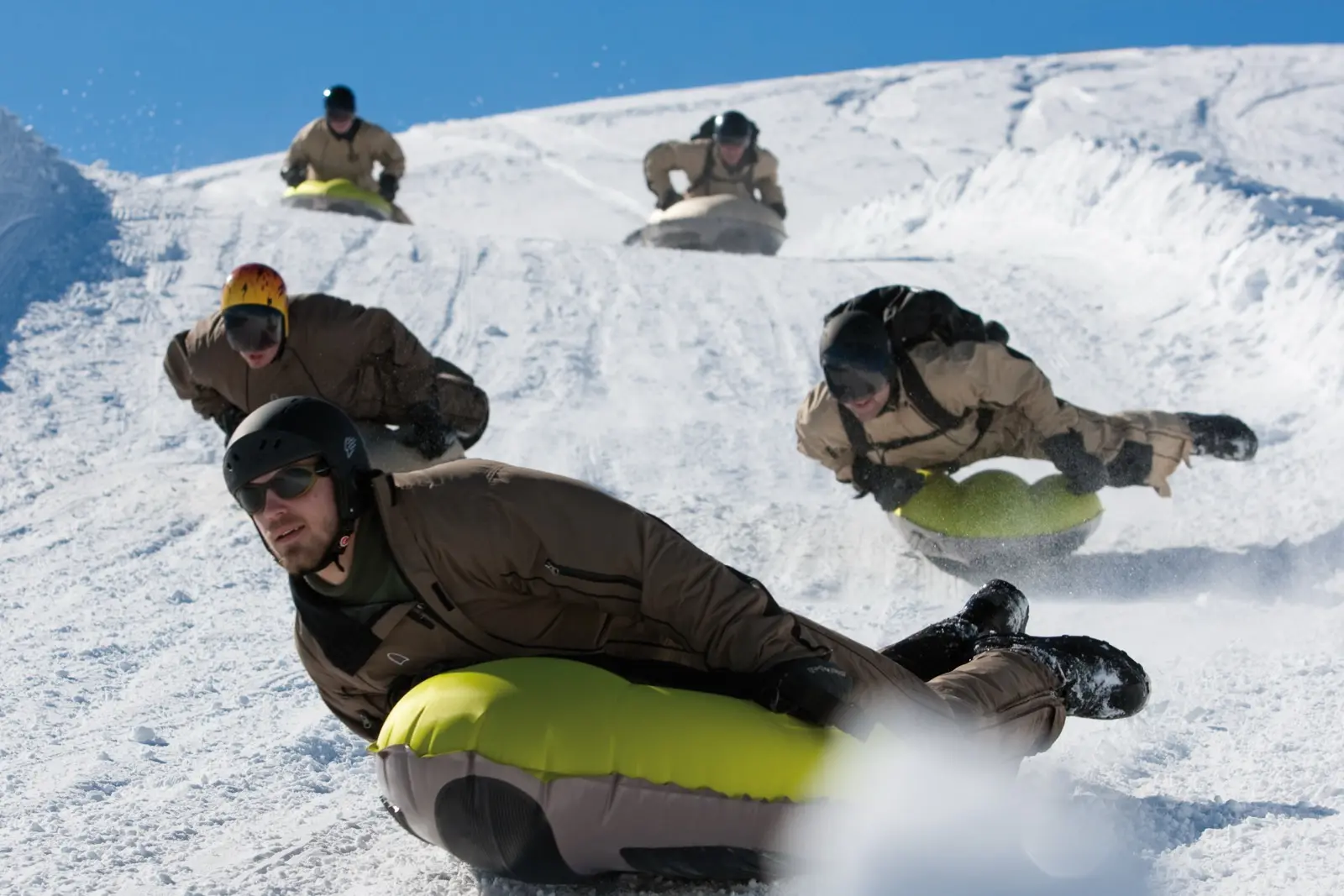
- Also
- Snow bodyboarding · Hammerhead sledding · the Krazy Karpet
- Powered by
- Gravity
- On the record
- Where it started for us: 1981, a four-year-old in central British Columbia, headfirst off a jump on a Krazy Karpet.
An airboard is an inflatable bodyboard for the snow. You lie on it chest-down, chin over the nose, hold the side handles and change direction by shifting your upper body.
It comes from Switzerland. Joe Steiner of Zug worked on it for years after riding inflatable sleds he found disappointing, and it reached the Swiss public in the early 2000s.
Before airboards there were plastic sleds and a lot of snow. Face Level's founder, Josh Galt, first went headfirst at four, off a jump in central British Columbia on a Krazy Karpet. The position stuck.
Bodyboarding
Wave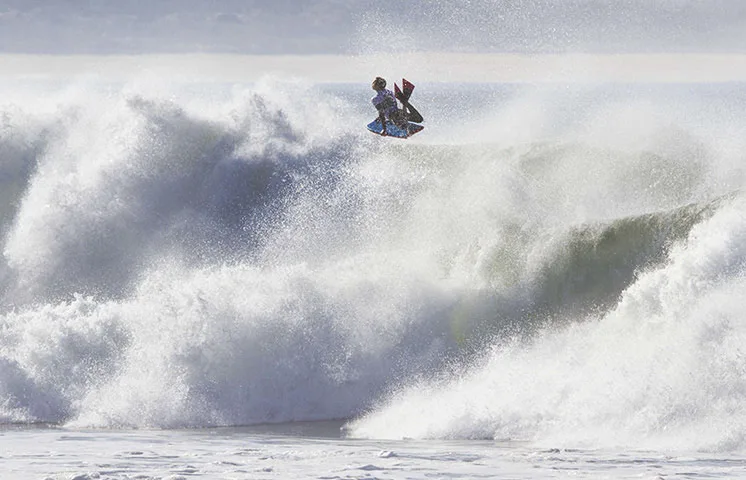
- Also
- Bodysurfing · boogie boarding
- Powered by
- The wave, after a few hard kicks to catch it
Wave riding on a short, soft board, lying on your stomach with fins on: the horizontal school of surfing, closer to the water than any stand-up rider gets. Tom Morey invented the modern bodyboard, the Boogie board, in 1971. Prone is the original stance. Drop-knee, with one fin planted forward on the deck, came later in the 1970s, and it stands you halfway up.
Bodysurfing takes the board away: fins, sometimes a small hand plane, and your own body as the planing surface.
Xledding
Road
- Also
- Street sledding
- Powered by
- Gravity
- Photos wanted
- All we have from this one is the old flyer. Ridden it? Send us yours.
Headfirst down a paved road on a wheeled sled, lying prone, chin just above the asphalt. It's the road's answer to skeleton, and the mirror image of street luge, where riders lie on their backs and go feet first.
Skeleton
Ice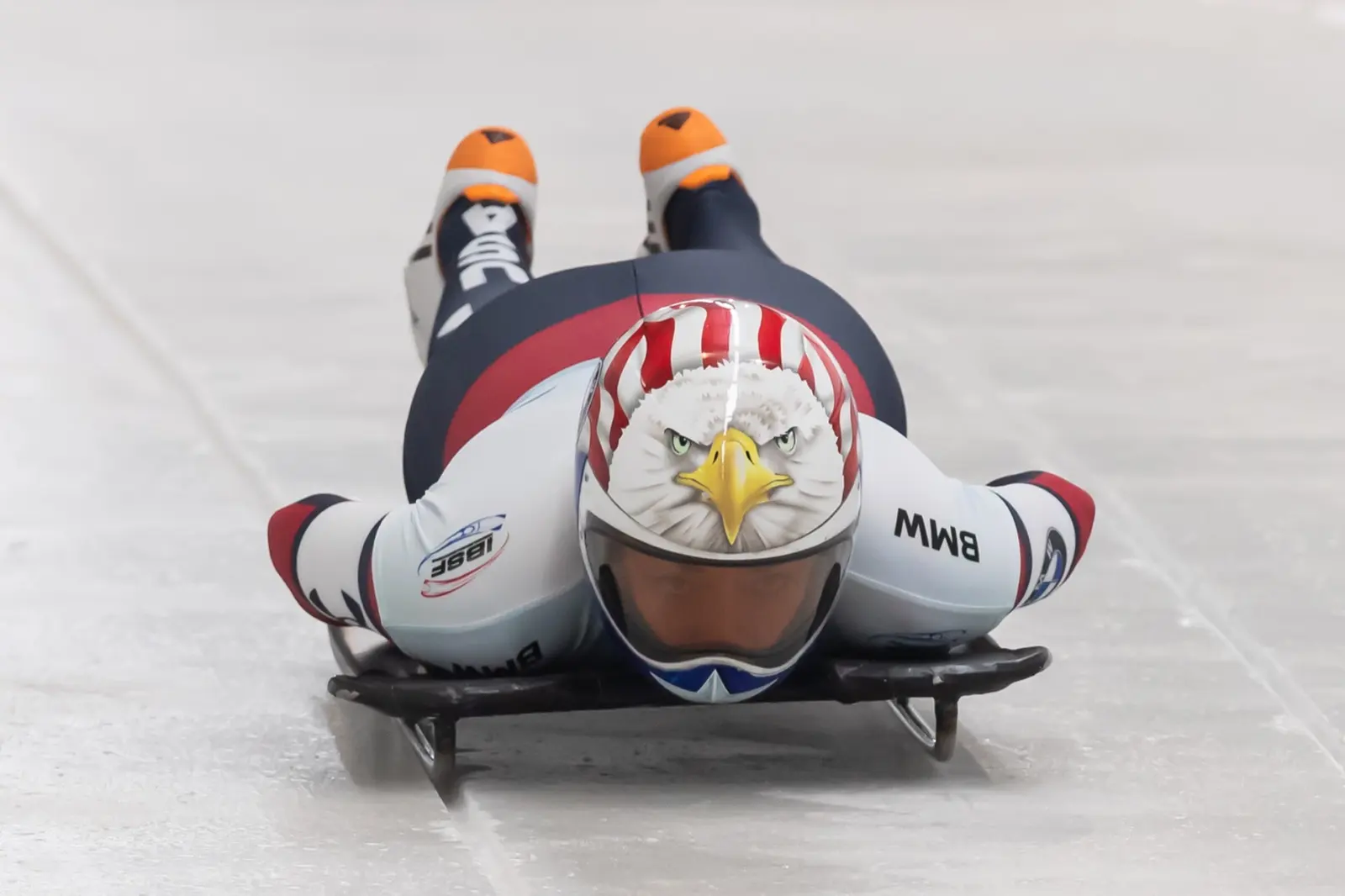

- Also
- Riding the Cresta Run
- Powered by
- A sprint start, then gravity
- On the record
- In 2009 we interviewed Katie Uhlaender, who went on to race skeleton at five Olympics.
The Olympic sliding sport. Athletes sprint pushing a small sled, dive onto it and ride face down and headfirst through the curves of an ice track. At the elite level they pass 130 km/h (81 mph) and pull up to 5 g.
Skeleton grew out of tobogganing in St. Moritz, Switzerland, where the Cresta Run was built in 1884. It was raced at the 1928 and 1948 Winter Olympics, both in St. Moritz, and has been on the Olympic program for good since 2002.
In 2009 Face Level interviewed Katie Uhlaender. She became the first American woman from any sliding sport to make five Olympic teams, racing skeleton from Torino 2006 to Beijing 2022.
Freediving
Sea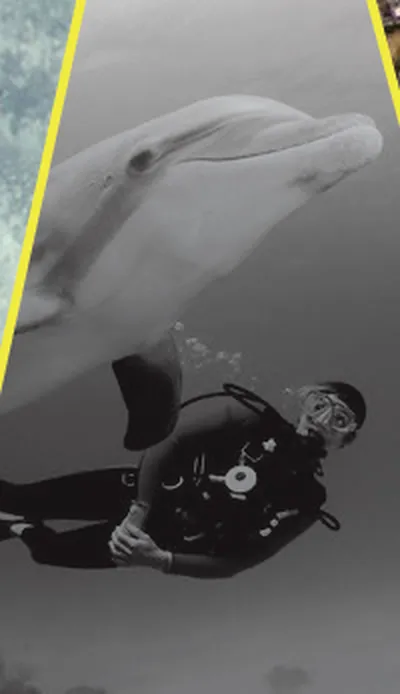
- Also called
- Breath-hold diving · apnea
- Also
- Snorkeling · scuba
- Powered by
- Your own body, on one breath
- Photos wanted
- All we have from this one is the old flyer. Dived it? Send us yours.
Freediving is diving on a single held breath, with no breathing apparatus. Swimming it is the face-level part: body flat, head leading, driven by fins or your own stroke.
Competitive freediving is governed by AIDA and CMAS. Constant weight goes for depth along a guide line. Dynamic apnea goes for distance underwater along a pool, about as horizontal as a sport gets.
Windrafting
Sail
- Powered by
- The wind
- Photos wanted
- All we have from this one is the old flyer. Sailed it? Send us yours.
Sailing lying down. You lie prone on a small raft, hold the sail in your hands, and the wind pulls you across the water. It's the only one of the eight that runs on wind.